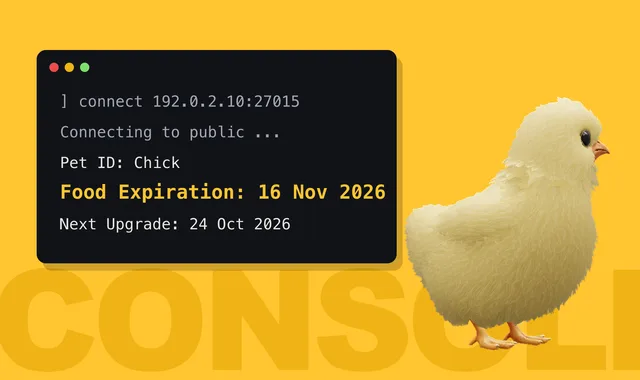

The CS2 pet chicken, explained: egg, hatch, feeding, coats and the HatchBook
Everything the game tells you about the chicken, in one place: where the egg comes from, the week to hatch, the Tuesday feed, the four stages, the 34 coats and the twenty-page HatchBook, in the game’s own words.

In this post10 sections ▾
A chicken arrived in Counter-Strike 2 with the Rush Hour update on 22 September 2026, and it arrived as an egg. Since then the same questions come up in every lobby: where is the egg, when does it hatch, what happens if you forget the feed, and which of the 34 coats will it grow. This is the whole life of the CS2 pet chicken in one place, with the game's own lines quoted where it has them, and a few honest numbers from the owners who registered their birds on The Coop.
Where the egg comes from
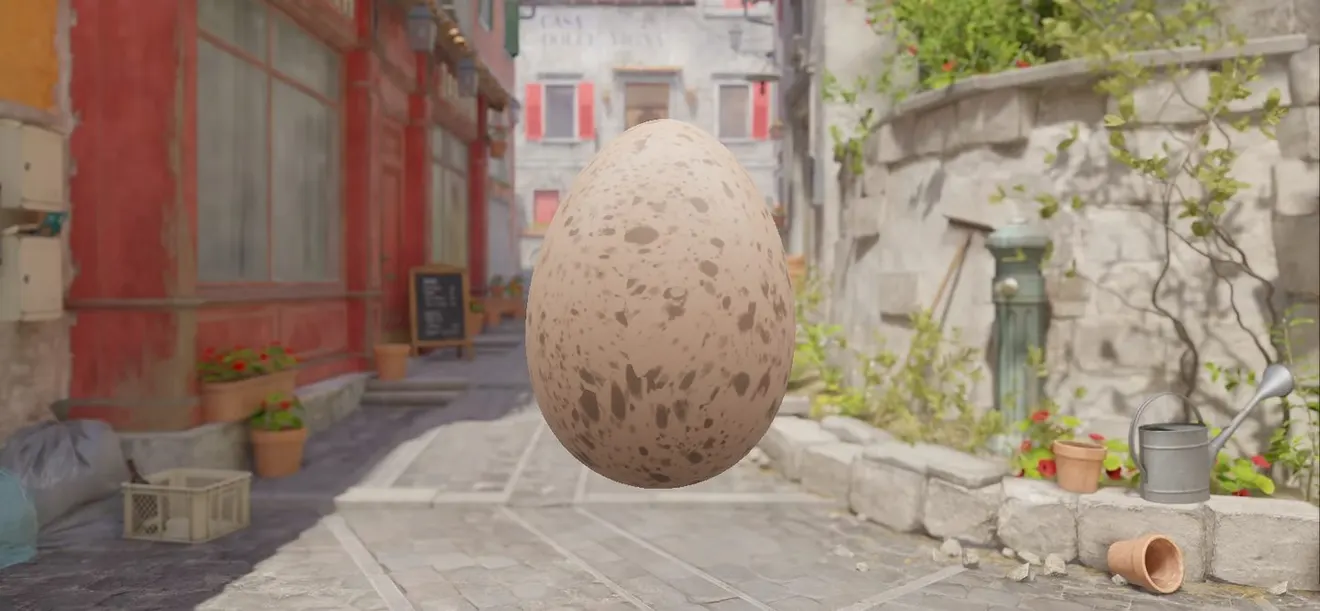
Prime accounts earn a Weekly Care Package by ranking up once in a week. The package offers a few things, and the Chicken Egg is one of them. Players report that it takes both of the package's picks to get it, so if you want the bird, choose the egg on both. One pet per account: the game refuses a second egg with a plain note that you already own a pet.
The egg does not appear in your inventory, which is where most people look first. It sits in the nest next to your agent on the main menu, and that nest is where everything about the pet happens: hatching, feeding, naming and the HatchBook.
No Prime, no egg. The Weekly Care Package is a Prime feature, so a free account never sees one. Nothing in the game or on any site changes that.
When it hatches
The game commits to exactly one length of time in the whole feature, and it is this one:
The game's own textYour Egg is not ready to hatch yet. It will hatch in a week or so from when you got it.
The date is printed on the cover of the HatchBook, the photo album the egg comes with. On the day, the nest shows the hatch itself:
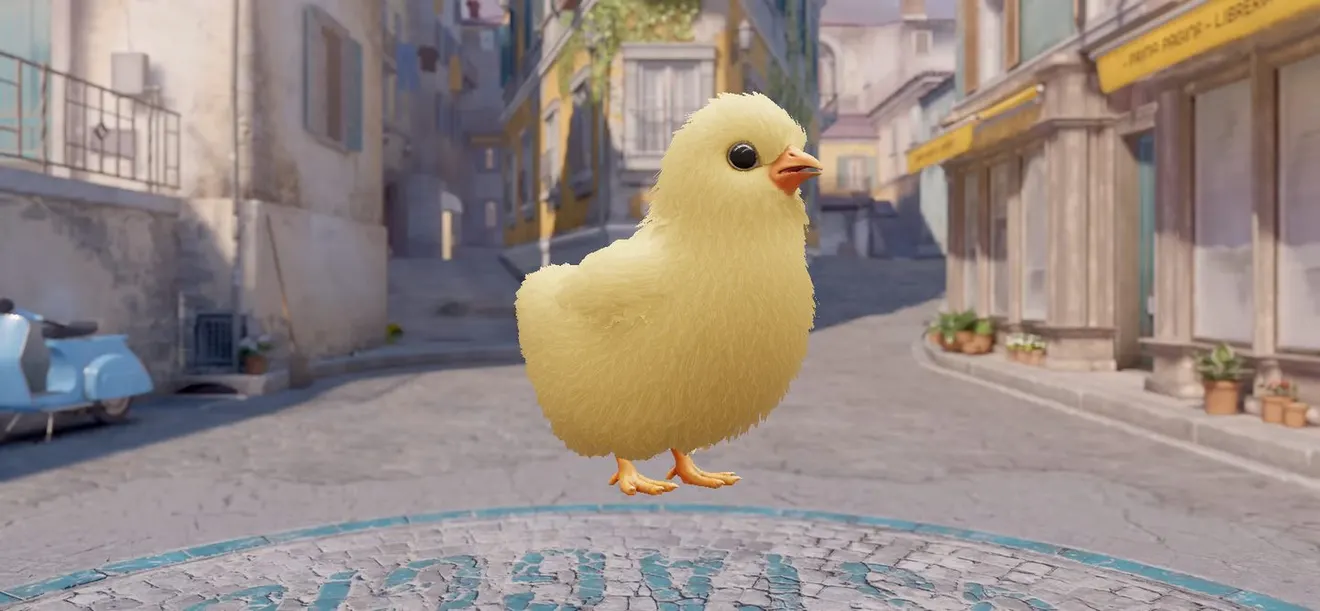
The game's own textLook! Your egg is hatching! Time to meet your chick.
An egg still needs feeding. Leave it without food and it expires before it hatches, with the gentlest line in the game: Your egg has been moved to a warmer nest.
Feeding and the Tuesday reset
Feed is the Chicken Feed item in the same Weekly Care Package, so the loop is simple: rank up once a week, open the package, take the feed, and feed the pet from its nest. The package resets every Tuesday at 17:00 Pacific time, which is Wednesday 00:00 UTC in summer and 01:00 UTC in winter.
Where you are | The reset, summer time | The reset, winter time |
|---|---|---|
Los Angeles | Tuesday 17:00 | Tuesday 17:00 |
New York | Tuesday 20:00 | Tuesday 20:00 |
São Paulo | Tuesday 21:00 | Tuesday 22:00 |
London | Wednesday 01:00 | Wednesday 01:00 |
Berlin, Warsaw | Wednesday 02:00 | Wednesday 02:00 |
Istanbul, Moscow | Wednesday 03:00 | Wednesday 04:00 |
Beijing, Shanghai | Wednesday 08:00 | Wednesday 09:00 |
The weekly reset by city. Pacific time changes with daylight saving, so the UTC hour moves by one in November and March.
The game warns you in the main menu before the bowl is empty:
The game's own textYour pet is running low on food. Grab more feed from a Weekly Care Package soon.
Miss a week and the pet leaves for good. The farewell it shows is called Retirement, and it reads: Your pet has accepted a position elsewhere. The offer included meals. The second line is shorter: Turns out chickens need food. Who knew?
How long is a bowl? The game does not say. The Coop counts rations as seven days from each feed until enough owners have reported the real length, and sends a reminder 24 hours before they run out, then one more at three hours.
Four stages, and how long each one takes
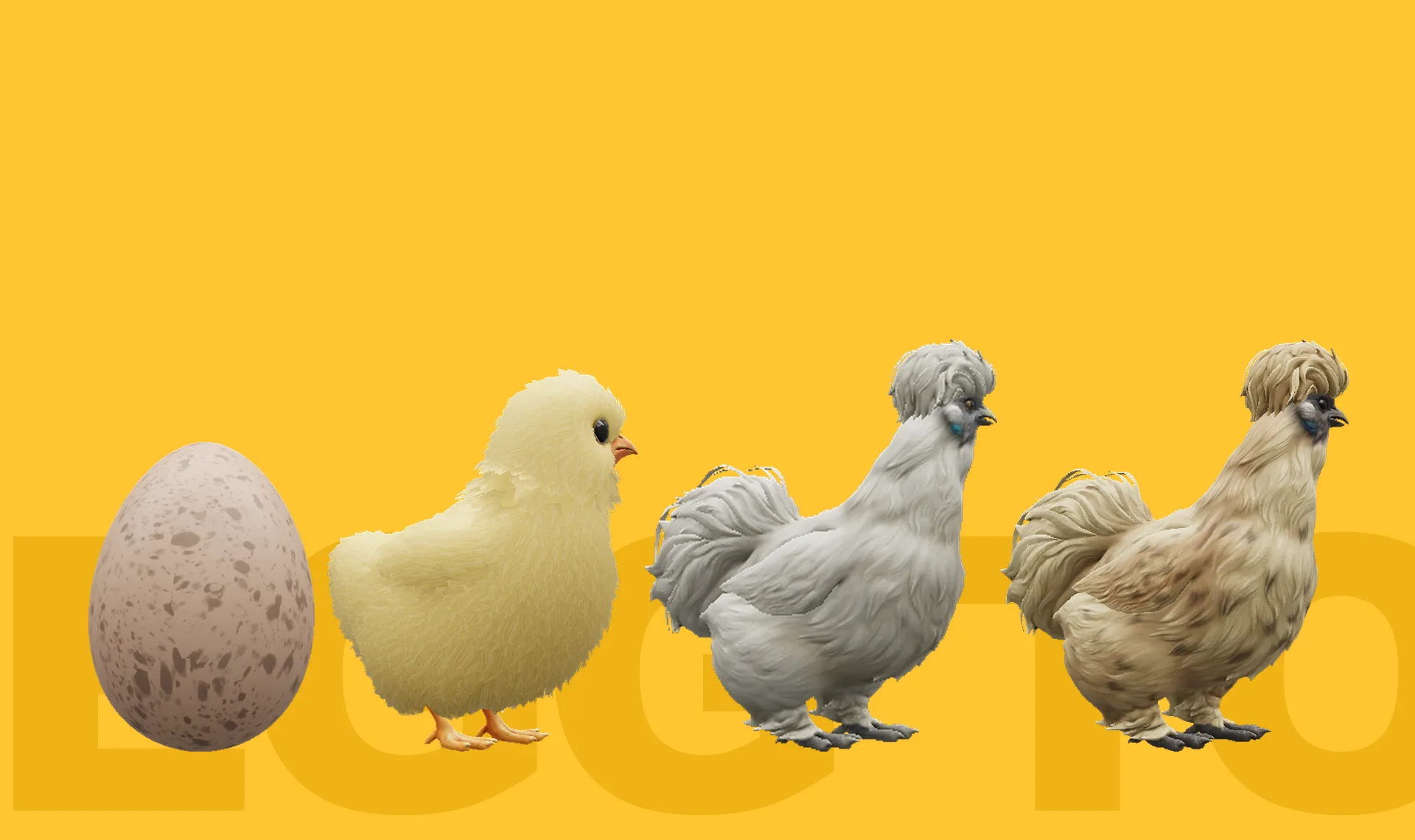
The chicken grows through four stages: egg, chick, pullet and hen. Only the egg's week is official. The rest comes from a datamine of the game's files and is marked as an estimate until owners' reports replace it.
Stage | How long | Where the number comes from |
|---|---|---|
Egg | About 7 days | The game: "a week or so" |
Chick | About 3 weeks | Datamine, not confirmed |
Pullet | About 3 to 4 weeks | Datamine, not confirmed |
Hen | About 90 days | Datamine, not confirmed |
Hatch to farewell | About 140 days | Datamine, not confirmed |
The timeline as it stands. The register on The Coop replaces each estimate with the median of what owners report, once 30 owners have reported a change.
Each change comes with a line in the nest. The chick is told it will be a pullet soon, and the pullet gets the longest one:
The game's own textGrowing fast, colors coming in, and cleared to deploy with you. Get your photos in now. It won't stay this size for long.
And at the end of the road:
The game's own textA full-grown hen. You raised it well. Enjoy your time together.
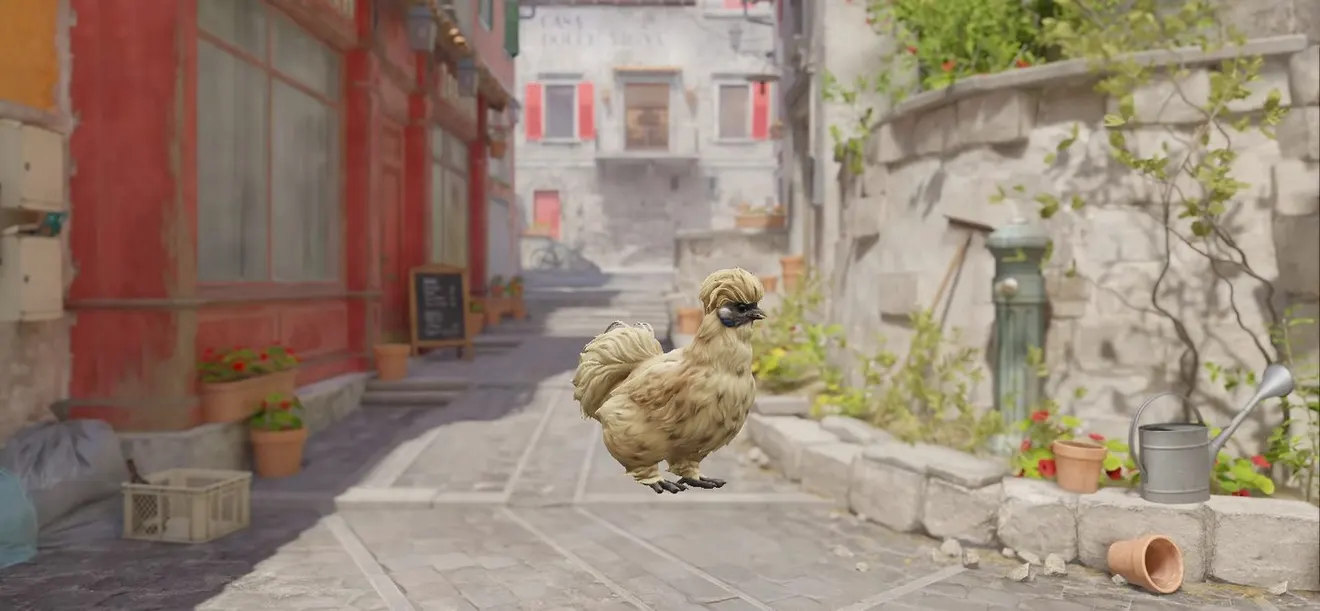
The 34 coats
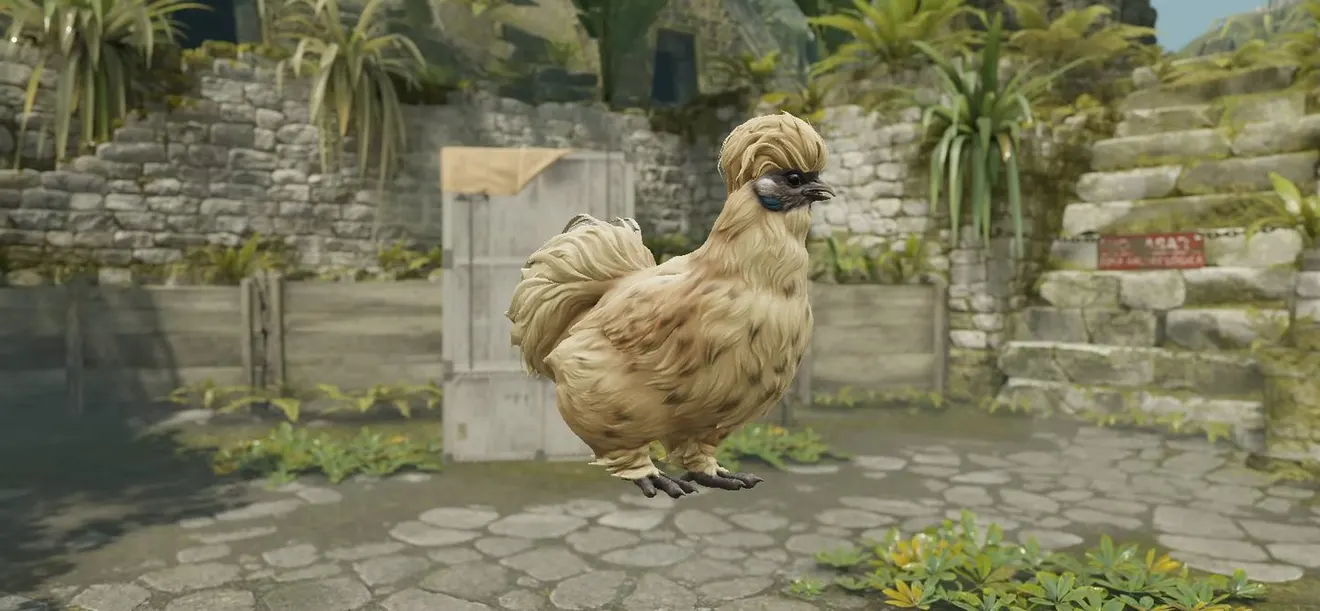
The breed is set from the start, and the coat shows when the chick becomes a pullet. There are three breeds and 34 coats between them:
Breed | Coats | A few of them |
|---|---|---|
Catalana | 13 | Tan, Black White Head, Blue, Dark Orange, Yellow Red Gradient |
Silkie | 9 | White, Splash, Leopard, Red Beetle, Purple |
Polish | 12 | Brown, Blue Yellow, Green with Red Head, Orange with Black Stripes |
Every coat, with how many owners have registered each one, is on the coats page.
The game publishes no odds for any of them. The percentages you may have seen elsewhere are weights read out of game files, not hatched birds. The Coop's coats page shows the other thing, which is how many owners have actually registered each coat, and it shows rarity tiers in the usual CS colours once a thousand birds with coats exist.
The HatchBook: twenty pages in four chapters
Every egg comes with a HatchBook, a photo album with twenty pages that each ask for a specific picture from the photo booth. The chapters follow the stages: six chick pages, six pullet pages, three Brave pages and five hen pages. The page hints are short and particular:
Your chick, up close
Your chick at the Picnic
Your pullet on Mirage, Nuke, Cache or Ancient.
Your pullet mid-jump, in a party hat. Confetti and sparks optional.
Your hen perched on you, in Sepia
Your hen kicking or flying. Lightning optional.
The photo booth has poses, tricks, hats and filters, and its locations are maps. Finishing a match on a map on official servers unlocks it as a stage. A young bird is told as much when you try early:
The game's own textOlder pets can visit locations with you. Finish a match here on official servers to unlock it as a stage.
The captions the book prints under its own pages are the best writing in the feature. A chick in your hands is a future teammate, currently about the size of a grenade. A chick in the park: Attempted flight. Results pending. A hen on your shoulder is listed as small, armed, unbothered.
The Brave chapter
Three pages are not photos but incident reports. The chicken cannot die in a round, but the book keeps a record when it meets fire, a Zeus or the bomb, and each page is written up like a case file:
The game's own textLocation: undisclosed bomb site. Cause: several kilos of C4. Casualties: 1 chicken, briefly.
The game's own textLocation: too close. Cause: one full charge. Casualties: your dignity.
Naming, matches and trading
Naming. From the chick stage, up to 20 characters, and you can rename it once per stage. In game: Inventory, pet, Rename.
Matches. From the pullet stage the bird can come to maps with you, and each map you finish a match on becomes a photo location.
Trading. No. Eggs, feed and pets are untradeable and have no market. There is no inspect link either, because the pet is not a Steam inventory item. Anyone selling one is selling an account.
Dying. Not in a round. The pet leaves in exactly three ways: it runs out of food, the egg is never fed, or it reaches the end of a long life. That last farewell reads: Your pet has reached the end of a long, loud life. Nothing left to do but wave.
What owners have reported so far
Two weeks in, owners have registered 26 birds on The Coop, and nearly all of them are still eggs or chicks, which is exactly where the timeline says they should be. Twenty-two feeds were reported this week. The charts that need thirty owners to be honest are still waiting, and the page says so instead of showing a small number as a fact. The weekly Flock Notes will carry the first real stage lengths when they exist.
Reported by owners. Every number on The Coop is a tap by a bird's owner: Fed it, It hatched, Coat shown, Grown, It left. Nothing is read from the game, and the game publishes no numbers of its own.
Quick answers
How do I get a CS2 chicken? Rank up once in a week on a Prime account and pick the Chicken Egg from the Weekly Care Package, on both picks. One per account.
Where is my egg? In the nest beside your agent on the main menu, not in your inventory.
When does the egg hatch? About a week after it drops. The HatchBook cover prints the date.
How often do I feed it? Once a week, with the feed from the Weekly Care Package, which resets Tuesday 17:00 Pacific.
Can I trade or sell it? No. Pets, eggs and feed are untradeable, with no market and no inspect link.
Which coat will I get? One of 34 across Catalana, Silkie and Polish, decided when the chick becomes a pullet. The game publishes no odds.
Give yours a page
Register your bird on The Coop in about a minute: its stage, its name once it has one, and its coat when it shows. You get a rations clock that counts down from each feed, reminders before the food runs out, a card that unfurls when you paste the link, and a place in the register that counts every registered chicken by stage and coat. No egg yet? The Studio lets you try every coat in 3D and build a BOT card while you wait for Tuesday.